Streatham man and van removals for home and business moves

Streatham man and van removals need to be straightforward, careful and well matched to the size of the move. We provide a practical service for customers who want items moved across London or further afield without unnecessary complication, whether the job involves a single bulky item, the contents of a flat, or a small office load. The focus is on safe handling, sensible loading and a clear plan for getting possessions from A to B with as little disruption as possible.
Our approach suits smaller removals, mixed furniture transport and moves where flexibility matters more than a large lorry. A man and van service can be useful when access is tight, timing needs to be coordinated around work or building rules, or the move does not justify a full-scale removal crew. If you are comparing options, the man and van service page gives a simple overview of the core service, while this homepage explains the typical work and how to request a quotation.
We aim to make the service clear from the start: what needs moving, where it is going, and what support is needed at each end. That might include loading and unloading only, help with a few items of furniture, or a fuller move with boxes and household goods. For larger or more structured projects, the relevant pages later in this site explain related moving options in more detail.
House moves handled with a practical van-and-porter approach

House moves often need the sort of planning that keeps the day calm. A man and van setup is usually best when the property is a flat, a small house, a shared home, or a partial move where only selected rooms are being cleared. The service can cover beds, sofas, wardrobes, tables, appliances and packed boxes, with the emphasis on moving household items safely and efficiently rather than overselling a bigger operation than the job requires.
For customers who are comparing different house-moving pages, home moves and house removals describe the same broad family of work from slightly different angles. The useful distinction is usually in scale and support: some moves need just a vehicle and handling help, while others need more time for dismantling, loading sequence and careful placement at the destination. We can discuss the right match once the job details are clear.
When preparing for a move, it helps to group belongings by room, separate fragile items and make sure larger pieces can be taken out of the property without avoidable delay. If there are stairways, narrow hallways or lift restrictions, those details matter. A concise list of items and any access notes is usually enough to shape a sensible quotation. Clear information at this stage makes it easier to plan the right vehicle size and handling support.
Commercial relocations and office furniture transport
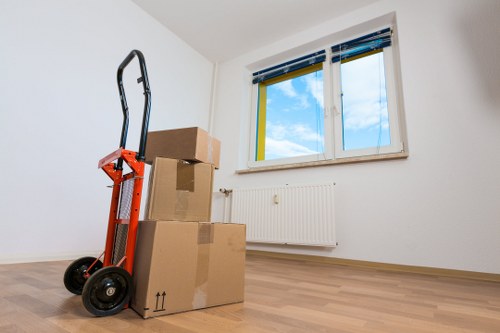
Commercial moves need a slightly different rhythm from domestic work. Desks, chairs, filing cabinets, compact IT items and stock must often be moved in an order that keeps the business usable for as long as possible. A man and van service can be a sensible choice for small offices, studio spaces, consulting rooms and other modest commercial premises where a full removals operation would be more than is needed.
Our commercial moves and office removals pages are the most relevant follow-up reads for business customers who need to move equipment or furniture with limited downtime. The work may involve collecting items from one floor and delivering them to another, clearing an old unit, or shifting selected furniture as part of a phased relocation. The aim is always to keep handling orderly and avoid confusion about what is going where.
In practice, business moves benefit from a simple inventory, labelled boxes and a clear decision on which items stay in service and which are being retired. If office furniture needs dismantling, reassembly or staged loading, that should be set out before the job begins. We can then quote on the basis of the real task, not on guesswork. That makes the service more accurate and easier to schedule.
Single-item collections, furniture pick-up and transport of bulky pieces
Not every customer needs a full move. Sometimes the job is to collect one sofa, a bed frame, a dining set, a wardrobe, an appliance or a few items purchased privately. A man and van option is often the simplest way to move these larger pieces without arranging a specialist freight service. It can also suit customers who need items brought from storage, a seller’s property or a showroom to a home or workplace.
For this type of work, the item’s size, weight, access and protection needs are usually more important than the total number of pieces. The furniture pick-up page is useful for anyone whose main requirement is the collection and delivery of one or two awkward items. We handle loading and unloading with care and can discuss whether the piece needs to be wrapped, carried by more than one person or moved with extra space in the vehicle.
Where a customer is not sure whether a collected item will fit through stairwells or doorways, it is better to check measurements early rather than assume. Photos can help, but dimensions and access details matter just as much. A well-prepared request normally includes the item list, collection and delivery points, and any need for disassembly or protective wrapping. That information keeps the quotation grounded in the actual move.
Packing support, protection and the order of a well-run load
Packing and loading are where a lot of the value in a good man and van service becomes visible. Well-packed boxes, protected corners and sensible stacking reduce the chance of movement in transit. This is especially relevant for fragile household goods, mixed furniture loads and moves with awkward shapes that do not sit neatly in standard boxes. The objective is not just transport, but a stable and secure load from start to finish.
Customers who want extra help before the move can look at packing and unpacking services alongside the main moving pages. Packing support can be useful when time is tight, when there are breakables to organise, or when someone would rather have assistance preparing a home for removal day. The exact level of help can vary, so it is best to be explicit about whether the task is full packing, partial packing or help at the destination only.
Simple preparation usually works best: keep essentials separate, identify fragile boxes, and make sure the items that need the most care are visible before loading begins. If dismantling is needed, note which furniture requires it and whether all fixings are present. The job then becomes a managed sequence rather than a scramble. Good loading order also helps with unloading, especially when priority items need to come off first.
About Streatham

Streatham is a long-established district in south London, within the London Borough of Lambeth, and it is known for its distinctive linear character along Streatham High Road. Historically part of Surrey before the creation of Greater London, the area developed from a rural settlement into a suburban centre as transport links improved during the nineteenth and early twentieth centuries. Its main road remains the defining spine of the district, but the surroundings are more varied than a single street suggests, with residential roads branching away towards parks, schools and local shopping parades. Streatham Common is one of the area’s best-known open spaces, providing grassland, mature trees and views across a broader south London landscape. Nearby, Tooting Bec Common extends the open-green feel to the north-west, while the Streatham Hill and Streatham station areas connect the district to wider rail and bus networks. The area also has a cultural identity shaped by a mix of long-standing local institutions, entertainment venues and everyday high-street commerce. Historic buildings sit beside later twentieth-century development, and the housing stock includes terraces, purpose-built flats and interwar homes, creating a varied urban pattern rather than a single architectural style. This combination of transport corridor, green space and dense neighbourhood living gives Streatham a character that feels active, practical and well connected, with enough local distinctiveness to stand apart from nearby districts while still forming part of the wider inner-London fabric.
How to plan a move with fewer surprises
The easiest quotations are usually based on a simple but complete outline of the work. That means listing the main items, the number of floors involved, whether there is lift access, and any parking or loading restrictions that may affect the visit. If a move includes both furniture and boxes, it is worth separating the two, because the handling effort can differ. Clear information helps with timing, vehicle choice and the amount of loading support required.
A short written note is often enough for the first stage of the enquiry. Mention whether the job is a house move, a furniture collection, or a business relocation, and then add any special points such as fragile items, awkward access or dismantling needs. If you are comparing service pages, removal services gives a broader view of the general category, while this page is centred on the more flexible man and van format. The two are related, but they are not always interchangeable.
It also helps to think about the destination before move day arrives. If furniture needs to be placed in specific rooms, or if you want certain boxes unloaded first, say so in advance. This avoids rehandling and helps the day run in a tidy sequence. Good planning does not need to be complicated; it just needs to be specific enough for the work to be priced and carried out properly.
Local removals for flats, shared homes and compact properties

Many man and van jobs are really local removals for properties with limited access or modest contents. Flats above shops, maisonettes, shared houses and compact homes often need a service that can work around stairs, narrow corridors and controlled parking. A vehicle-based removals service is usually best when the move must be organised carefully but does not demand the scale of a large multi-crew operation.
The pages for house movers, removals and movers are useful if you want to compare related service wording and see how the broader moving category is presented on the site. These pages sit alongside the man and van option rather than replacing it. The right choice depends on whether your move is a few items, a partial household relocation or a fuller transfer of furniture and boxes.
Where a property has items in storage, or where the move is split across two addresses, the sequence of collections and deliveries should be set out in advance. That is especially important if the move involves a mixture of heavy and delicate pieces, because the order of loading and unloading can affect both speed and protection. We can then shape the work around the actual circumstances rather than forcing the job into a generic pattern.
Choosing the right vehicle, access and load type
Vehicle choice is one of the most practical parts of any removals enquiry. A smaller van may be ideal for a single sofa, a few appliances or a light flat move, while a larger load might call for something with more space to keep furniture upright and boxes separated. The point is not to make the van bigger than necessary, but to match the transport to the load in a way that is efficient and secure.
If you are comparing vehicle-led options, the site pages for moving van, moving truck and removal van can help you understand the wording used for different transport arrangements. Some customers mainly need the vehicle, while others need help with loading, unloading and careful placement. The most useful quotation is the one that reflects the actual work rather than a vague assumption about what might be required.
Access matters just as much as vehicle size. A straightforward ground-floor collection can be very different from a move involving a top-floor flat, a long walk from parking or restricted access times. If any item needs two people to carry it safely, mention that too. Accurate access details help keep the move efficient and reduce avoidable delays at either end.
What to include when requesting a quotation
When you ask for a quote, the most useful information is usually the simplest: what needs moving, where it starts, where it is going and whether any special handling is needed. A quick note can include approximate numbers of boxes, a list of furniture, and anything fragile, dismantled or unusually heavy. If there are time restrictions or building rules, those should be mentioned as well.
You can use the pricing and quotes page if you want to see how quotation requests are presented on the site before making contact. For many customers, a concise description of the job is enough to start the process, and it can be followed by extra details if the move becomes clearer. We prefer to work from real information rather than assumptions, because that is the best way to produce a practical quotation.
Useful quotation points often include the following: the number of rooms or main items, any stairs or lift use, parking distance, dismantling needs and whether the move is one-way or split between addresses. A message does not need to be long to be useful. It just needs to be complete enough for the service to be matched to the task without guesswork.
Final service details and next steps
There are situations where a move needs a little extra care because the contents are mixed, the access is tight or the timing needs to fit around other commitments. A man and van service works well in those cases because it can be tailored without becoming overly complicated. Whether the job is a household removal, a furniture collection or a small office transfer, the aim remains the same: transport the load safely and keep the day organised.
If you want to compare related service pages before sending an enquiry, removal company, removal companies and man with van are all relevant destinations within this site’s moving section. Each page reflects a different way of describing similar transport and removal work, so the best choice depends on the scale and purpose of your move. For many customers, the man and van format is the simplest fit.
If you are ready to move ahead, request a quotation with the key details of the job and we can take it from there. If you are still checking options, read the service pages above and keep your note concise: item list, access, addresses and any special handling. That is usually enough to begin a sensible quote for Streatham man and van removals.