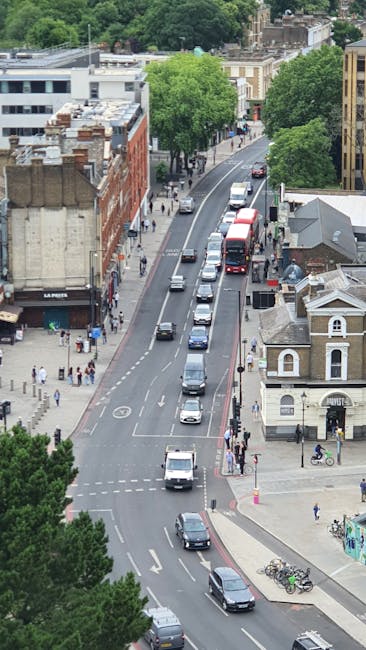
Streatham High Road man and van guide for tight access moves

If you are planning a move on or near Streatham High Road, the hardest part is often not the packing. It is the access. Narrow stairwells, awkward parking, busy traffic, basement flats, shared entrances, and that one sofa that seems to have been designed by someone who hated doorframes. This Streatham High Road man and van guide for tight access moves is built to help you get through the practical stuff without a headache.
The good news? A well-planned man and van job can handle tight access far better than a bigger removal setup in many cases. The trick is knowing what to measure, what to flag early, and how to avoid the small mistakes that turn a simple move into a long, sweaty afternoon. Let's keep it practical, local, and useful.
Expert summary: tight access moves are won before moving day starts. If you can describe the access clearly, choose the right vehicle size, and prepare the loading points properly, you will usually save time, stress, and a fair bit of money too.
Why Streatham High Road man and van guide for tight access moves Matters
Streatham High Road is busy, varied, and a little unpredictable in the way London streets often are. One address might have easy front loading and a lift. The next might be up two tight flights, behind a shared gate, with no place to stop except a short window that disappears the moment another car rolls past. That is exactly why tight access moves need a different approach.
When access is limited, every small delay compounds. A van parked too far away means more carrying. A front door that only opens part way means awkward turns. A steep stairwell means more care, more lifting, and more chance of damage if the load is rushed. In our experience, most problems are not dramatic. They are just inconvenient enough to slow everything down.
This matters for cost as well as safety. The cleaner the access plan, the easier it is to estimate labour, van size, and timing. If you have ever watched a move stall because nobody could find the loading point, you will know the feeling. Quietly frustrating. And expensive if it drags on.
It also matters for neighbours and building managers. A tight access move needs a bit of courtesy: keeping hallways clear, not blocking shared entrances, and moving efficiently so residents are not left listening to cupboard doors banging at 7:30 in the morning. Not ideal for anyone.
How Streatham High Road man and van guide for tight access moves works
A tight access move works best when the move is treated as a logistical puzzle rather than a simple pickup. The basic idea is to reduce friction at each stage: find the easiest route from room to van, choose the right vehicle, and make sure the loading area is realistic for the street and the property.
For most man and van jobs, the process usually starts with a clear description of the access conditions. That means more than "it's a flat." It means explaining whether there is a lift, how many stairs there are, whether the van can park outside, and whether bulky items need to turn around a landing. These details are what separate a smooth job from a messy one.
Then comes vehicle selection. A smaller, more manoeuvrable vehicle can be a better fit than a larger one if the street is tight or stopping space is limited. On some moves, a larger van or even a moving truck may be useful, but only if the road layout and parking conditions genuinely support it. Bigger is not always better. That sounds obvious, but people still get caught out.
Finally, the move itself is planned around sequence: what comes out first, where it gets placed, and how the load is arranged in the van so nothing shifts around. Tight access jobs often work best with a simple loading order. Heavy items first, fragile items protected, then lighter pieces filled in around them. Nothing flashy. Just tidy, careful logic.
Key Benefits and Practical Advantages
The biggest benefit of a well-managed tight access move is that it reduces stress. That may sound soft, but it is real. When you know the van can park sensibly, the items have been measured, and the staircase has been assessed, the move feels far less like a gamble.
- Less walking distance: if the loading point is planned properly, items spend less time being carried out and more time being moved safely.
- Better vehicle match: a smaller vehicle can make sense on cramped roads, while a larger one may suit repeat loads or bulkier furniture.
- Lower damage risk: careful route planning reduces bumps, wall scrapes, and the classic corner-of-a-sofa-vs-doorframe problem.
- More accurate timing: when access is understood, the job can be scheduled more realistically.
- Less disruption: neighbours, building staff, and other road users are less likely to be inconvenienced.
There is also a flexibility benefit. A man and van setup can be more adaptable than a larger removal operation when the job involves partial loads, small flats, student moves, or furniture pick-ups. If you only need a few items moved, or you are shifting from one tight-access property to another, it can be a very sensible fit.
For some readers, the main win is simply avoiding overpaying for a bigger operation than needed. If your move is compact but fiddly, a targeted service is often the smarter call. If it is a full household move, then it might be better to look at broader home moves or more structured removals support instead. The right choice depends on the load, not the ego. Which, let's face it, is how a lot of moving decisions should be made.
Who This Is For and When It Makes Sense
This guide is for anyone dealing with awkward access on Streatham High Road or nearby streets. That includes ground-floor flats with narrow hallways, upper-floor apartments with awkward stair turns, maisonettes with limited frontage, and homes where parking is just not straightforward.
It is especially useful if you are:
- moving in or out of a flat with tight internal stairs
- handling a student move with boxes, bags, and one alarming number of plants
- moving a few heavy items instead of a whole house
- trying to fit a same-day move into a narrow time window
- relocating furniture from a shop, warehouse, or private home
- dealing with access constraints in an office or studio space
If you are moving a piano, oversized wardrobe, large sofa, or awkward antique cabinet, the access question matters even more. In those cases, specialist handling may be the better route, and it can be worth looking at piano removals or furniture removals rather than assuming everything will fit through a standard path.
Sometimes people think tight access means the job is too difficult. Not usually. It just means the planning needs to be sharper. Truth be told, many moves are perfectly manageable once the details are clear.
Step-by-Step Guidance
- Assess the access before moving day. Measure doorways, stair width, hallway turns, and lift dimensions if there is a lift. Check whether bulky items can be angled safely or whether they will need disassembly.
- Check the parking reality. Look at the street, not just the postcode. Can a van stop close enough? Is there loading space? Are there restrictions at certain times? If your building has a loading bay or permit arrangement, confirm it early.
- Sort the inventory. Make a clear list of the items being moved. Note anything fragile, heavy, awkward, or high-value. This helps with vehicle choice and loading order.
- Decide whether you need packing support. If the move includes lots of fragile items, consider packing and boxes or packing and unpacking services to reduce breakage and speed things up.
- Choose the right service level. For small, simple loads, a man and van arrangement may be enough. If the load is larger or the access is very awkward, a more structured removal setup could be better.
- Book with realistic timing. Tight access jobs often take longer than people expect. Build in time for stairs, loading, and the unexpected pause when someone has parked in your planned spot. It happens.
- Prepare the property. Clear hallways, protect floors if needed, and keep exits open. If possible, reserve the closest route from the room to the van.
- Load in a sensible sequence. Heavy and stable items first, then medium items, then fragile boxes. Use straps and blankets where appropriate so items do not shift on the road.
- Confirm the finishing point. If the destination also has tight access, make sure there is a clear route inside. A move can be smooth at one end and awkward at the other, which is a bit annoying but very common.
One practical tip: if you think your sofa is "probably fine," measure it properly. That last ten centimetres is where optimism goes to die.
Expert Tips for Better Results
Small details make the biggest difference on tight access moves. Here are the ones worth taking seriously.
- Send photos early. A quick photo of the stairwell, doorway, parking spot, or lift can save a lot of back-and-forth. It is far better than guessing.
- Measure the awkward pieces, not just the room. Wardrobes, mattresses, desks, and sofas are the usual culprits.
- Disassemble where practical. Taking legs off a table or removing shelving can turn a difficult item into an easy one.
- Keep the route clear. Shoes, plant pots, bins, prams, and loose cables all become obstacles the minute you start carrying a heavy item.
- Use the building's quietest window. If you have any say in timing, avoid peak road activity and noisy internal periods where possible.
- Think about the return trip. The unloading route matters just as much as the loading route.
If your move is business-related, access planning becomes even more important. Office items, file storage, and workstations can create bottlenecks very quickly. For that kind of move, it can help to compare office removals and commercial moves options before booking.
And one more thing: the best movers are not necessarily the fastest. They are the ones who stay calm when the staircase is awkward and the lift is just a little too small. Calm wins. Nearly always.
Common Mistakes to Avoid
Most tight access problems are avoidable. That is the annoying bit. Here are the errors that cause the most friction.
- Assuming the van can park right outside. Streets around busy high roads can change quickly. Never assume.
- Underestimating stair difficulty. A staircase that looks fine in a photo may feel very different when carrying a heavy double mattress.
- Not mentioning lifts, basements, or split levels. These details materially affect timing and labour.
- Booking too small a vehicle for the load. That can mean extra trips, which sounds manageable until the day itself.
- Leaving packing until the last minute. Loose items slow everything down and make access issues worse.
- Forgetting about building rules. Some buildings have specific access times, entrance requirements, or noise expectations.
Another common one: people only tell the mover about the hard bit after the quote. That is usually when misunderstandings happen. Better to be open at the start, even if the access is a bit awkward. Especially then, actually.
Tools, Resources and Recommendations
You do not need a mountain of kit for a tight access move, but a few practical items help a lot.
- Measuring tape: essential for doorways, items, and stair width.
- Phone camera: useful for photos of the route, parking point, and items that may need dismantling.
- Furniture blankets or wraps: helpful for protecting corners and finishes.
- Straps and trolleys: useful where the surface and route allow safe use.
- Boxes in consistent sizes: far easier to stack and carry than a random collection of bags and mismatched cartons.
- Clear labels: especially helpful if your move involves multiple rooms or destination floors.
If you are still in the planning phase, a pricing conversation can also help you understand how access affects the job. The page on pricing and quotes is a sensible place to start if you want to compare the likely options before committing.
For customers who want reassurance about handling, insurance, and security, it is worth checking insurance and safety as part of your decision-making. Nobody wants a surprise during a move. There are enough surprises already, thank you very much.
Law, Compliance, Standards, or Best Practice
For most readers, the key compliance concerns are practical rather than legal drama. The main things to keep in mind are safe lifting, road access, building access rules, and the handling of personal or business property with care.
In the UK, movers and customers alike should think about manual handling, safe parking, and avoiding damage to communal areas. If a building has a management company or landlord rule set, it is sensible to follow it. That may include booking a lift, using protective coverings, or keeping to specific move times.
Best practice also means being realistic about what can be done safely by one person, two people, or a larger team. A narrow stairwell and a heavy item are not a challenge to "push through." They are a cue to slow down and make a better plan. Simple as that.
For formal policies and service expectations, it can also help to review a provider's health and safety policy and terms and conditions. If you are concerned about how your information is handled during booking or quote requests, the privacy policy is worth a look too.
Options, Methods, or Comparison Table
Choosing the right moving method depends on how tight the access is and how much you are moving. Here is a straightforward comparison.
| Option | Best for | Strengths | Trade-offs |
|---|---|---|---|
| Man and van | Small to medium loads, awkward access, single or partial moves | Flexible, practical, often more manoeuvrable | May require more than one trip for larger loads |
| Removal van | Furniture-heavy loads where a dedicated vehicle size is needed | Better for controlled loading and transport | Less flexible if the street is extremely tight |
| Moving truck | Larger moves with good loading access | Higher capacity | Can be harder to position on narrow roads |
| Full removals service | Whole-home or more complex moves | More hands, more structure, more support | May be more than you need for a small tight-access job |
For people moving into smaller homes or flats, a dedicated flat removals service can also be a better fit than a generic transport-only booking. If you are moving from or to a student place, student removals may be worth considering for the same reason: the job is usually compact but fiddly.
Case Study or Real-World Example
Imagine a second-floor flat just off Streatham High Road. The staircase is narrow, the front door opens onto a small landing, and the van cannot block the road for long. The move includes a bed frame, mattress, desk, chest of drawers, several boxes, and a bulky armchair that looks manageable until you try to angle it through the hallway.
In a case like this, the move goes well when the access is understood from the start. The mover arrives with a suitable vehicle, the larger furniture is partially dismantled before loading, and the van is parked at the closest safe point rather than the closest imaginable point. That small difference matters. A lot.
Because the route was clear, the team could move steadily without stopping to reshuffle items every few minutes. The boxes were loaded in a sensible order, the armchair was wrapped to protect the corners, and the destination property had its own narrow entrance handled in the same careful way. No drama. No scratched walls. Just a steady, clean job.
The lesson is simple: tight access does not mean difficult access if the planning is done properly. It usually just means less room for guesswork.
Practical Checklist
Use this checklist before booking or on the day of the move.
- Measure the largest items and the narrowest access points
- Confirm stair count, lift size, and landing turns
- Check where the van can legally and safely stop
- Take photos of entrances, hallways, and parking areas
- List fragile, heavy, and awkward items separately
- Decide whether anything needs dismantling
- Pack boxes evenly and label them clearly
- Reserve or clear the loading route if possible
- Confirm move timing with the building or landlord if needed
- Ask about insurance, safety, and booking terms before you commit
If storage is part of the plan because the destination is not ready yet, it may be worth looking at storage as a temporary option. That can take the pressure off when dates do not line up perfectly, which, to be fair, happens quite often.
Conclusion
A tight access move on or around Streatham High Road is rarely about brute force. It is about clear information, sensible vehicle choice, and careful handling from the first step to the last. If you know the measurements, think through the route, and communicate the awkward bits early, you give yourself a much better chance of a smooth move.
The best outcome is usually the boring one: everything fits, nothing gets damaged, and the job finishes on time. That is what good moving support should feel like. Calm, efficient, and a little uneventful. Beautiful, really.
Get a free quote today and see how much you can save.
If you want to understand the people behind the service before booking, you can also read more about the team and review the removal services available for different move sizes and access conditions.
Frequently Asked Questions
What counts as a tight access move on Streatham High Road?
A tight access move is any move where parking, stair width, door clearance, lift size, or turning space makes loading and unloading more difficult than usual. On Streatham High Road, this often means shared entrances, busy roadside parking, or compact flats.
Can a man and van service handle a narrow staircase?
Yes, often it can, provided the staircase is safe to use and the items fit. The key is accurate information before booking. If the stairs are especially narrow or the items are oversized, specialist handling may be better.
Should I choose a smaller van for tight access?
Usually, yes. A smaller vehicle can be easier to park and position close to the property. But the final choice should balance access with the amount of furniture and boxes you need to move.
How do I know if my sofa will fit through the doorway?
Measure the sofa at its widest point and compare it with the doorway, hallway turns, and any tight corners. If in doubt, take photos and measurements together. Guessing is where people get caught out.
What should I tell the mover before booking?
Tell them about stairs, lifts, parking, narrow hallways, basement access, awkward turns, and any bulky or fragile items. The more exact the information, the more accurate the plan and quote are likely to be.
Is packing important for tight access moves?
Very. Well-packed boxes are easier to carry, stack, and move through small spaces. For fragile or awkward loads, packing and unpacking services can reduce stress and damage risk.
What if there is nowhere to park outside?
Then the job needs to be planned around the nearest safe and legal stopping point. This may mean a longer carry, adjusted timing, or a different vehicle choice. It is better to know that early than discover it on the day.
Are tight access moves more expensive?
They can be, because they often take longer and may need more care or labour. That said, a tight-access move is still usually cheaper than booking a much larger service than you need. A proper quote should reflect the real access conditions.
Can same-day moves work with tight access?
Sometimes they can, especially if the move is small and well described. If you need a fast turnaround, same-day removals may be worth considering, but only if the access details are clear from the outset.
What is the safest way to move heavy furniture through tight spaces?
Protect the route, use two people where needed, keep the item balanced, and avoid forcing it around corners. If something feels too tight, stop and reassess. That little pause often prevents damage.
Do I need specialist help for offices or shops on Streatham High Road?
Not always, but commercial spaces can have their own access problems, loading limits, and time pressures. For business premises, it is worth looking at office relocation services or commercial moves if the job is more than a simple item transfer.
How can I make my quote more accurate?
Provide photos, measurements, the number of items, the number of floors, and parking details. If there is anything awkward, say so early. Honest details help create a more realistic quote and reduce surprises later.
What if I need short-term storage between moves?
That is common when dates do not line up neatly. In those cases, temporary storage can bridge the gap and make the move much less stressful.